
One implant.
A lifetime of confident smiles.
A missing tooth replaced from the root up — titanium post, custom crown, zero compromise on how it looks or feels.
Book a Free ConsultationWhat exactly is
a dental implant?
Think of it as a new tooth built the way a real one is — from the root up. A small titanium post goes into your jawbone, where it fuses with the bone over a few months, just like a natural root. Once it's firmly anchored, we top it with a custom crown shaped and shaded to match your other teeth. The result chews, speaks and smiles like it was always yours.
The post
A titanium root placed into the jawbone. This is what makes an implant permanent.
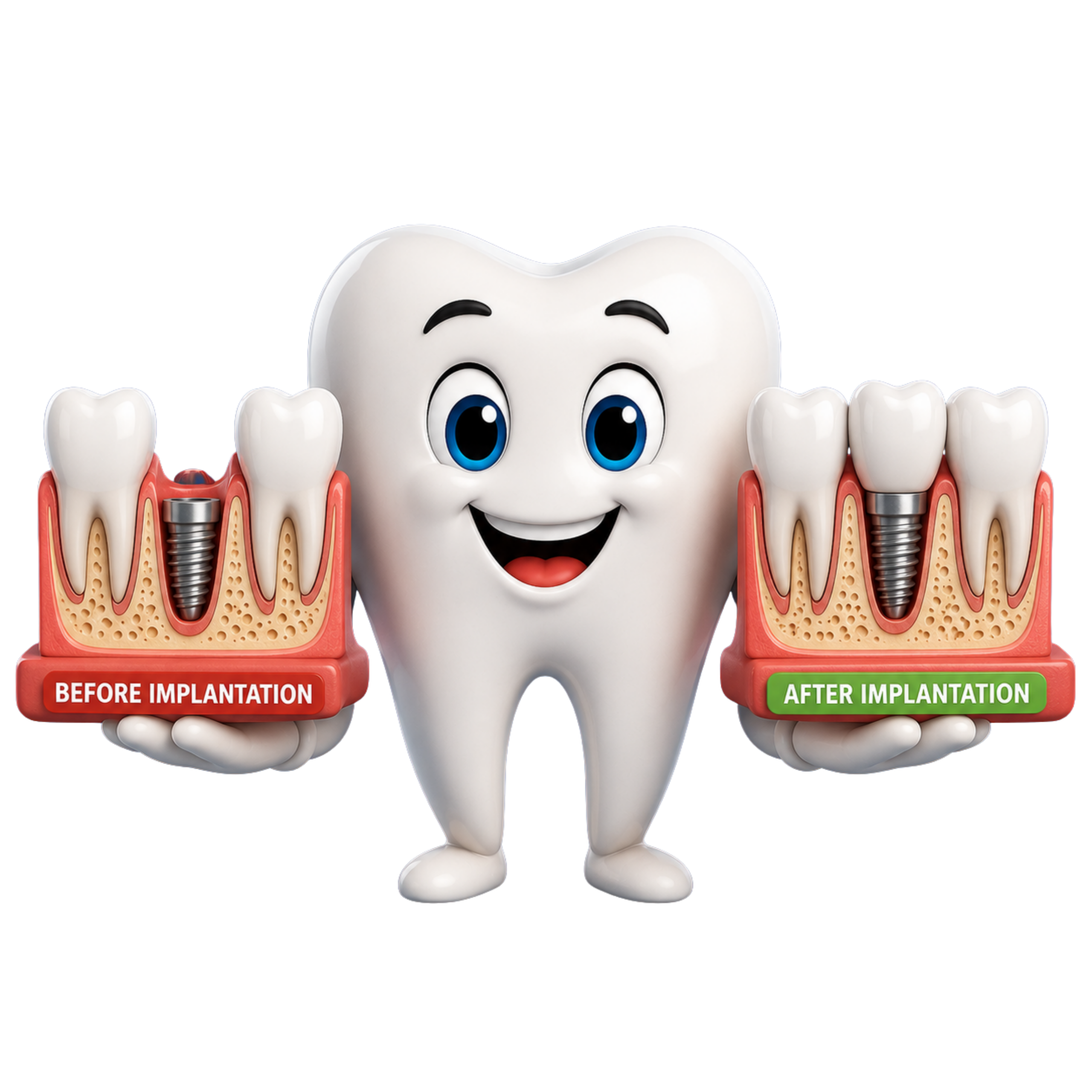
The crown
The visible tooth on top — custom-made to match the shape, size and color of your smile.

The questions people don't say out loud in the chair
No. The crown is shade-matched and shaped by a dental technician to mirror the teeth around it, so up close or across the table, it reads as your own.
It's rare, but it can happen. If the post doesn't fuse, we remove it, let the bone heal, and try again — most second attempts succeed.
Possibly some. A 3D scan shows exactly how much bone remains, and if needed, a bone graft can rebuild enough to support an implant.
Titanium implants are far too small to trigger detectors. They can appear on dental X-rays and CT scans, which is actually useful for your future care.
The crown itself can't decay, but the gum around it can still get infected if it isn't brushed and flossed like a natural tooth.
There's no upper age limit as long as your bone and gums are healthy. Younger patients usually wait until the jaw finishes growing, typically by the late teens.
No — we usually place a temporary crown or bridge over the healing implant, so you're never left with a visible gap.
It comes down to the neighboring teeth: a bridge relies on them for support, while an implant stands alone and leaves them untouched. We'll walk through both at your consult.