
Save your tooth.
Relieve pain instantly.
Gentle, high-precision endodontic care designed to eliminate infection, preserve your natural tooth, and restore full chewing comfort without pain.
Book a Free ConsultationWhat exactly is
a root canal treatment?
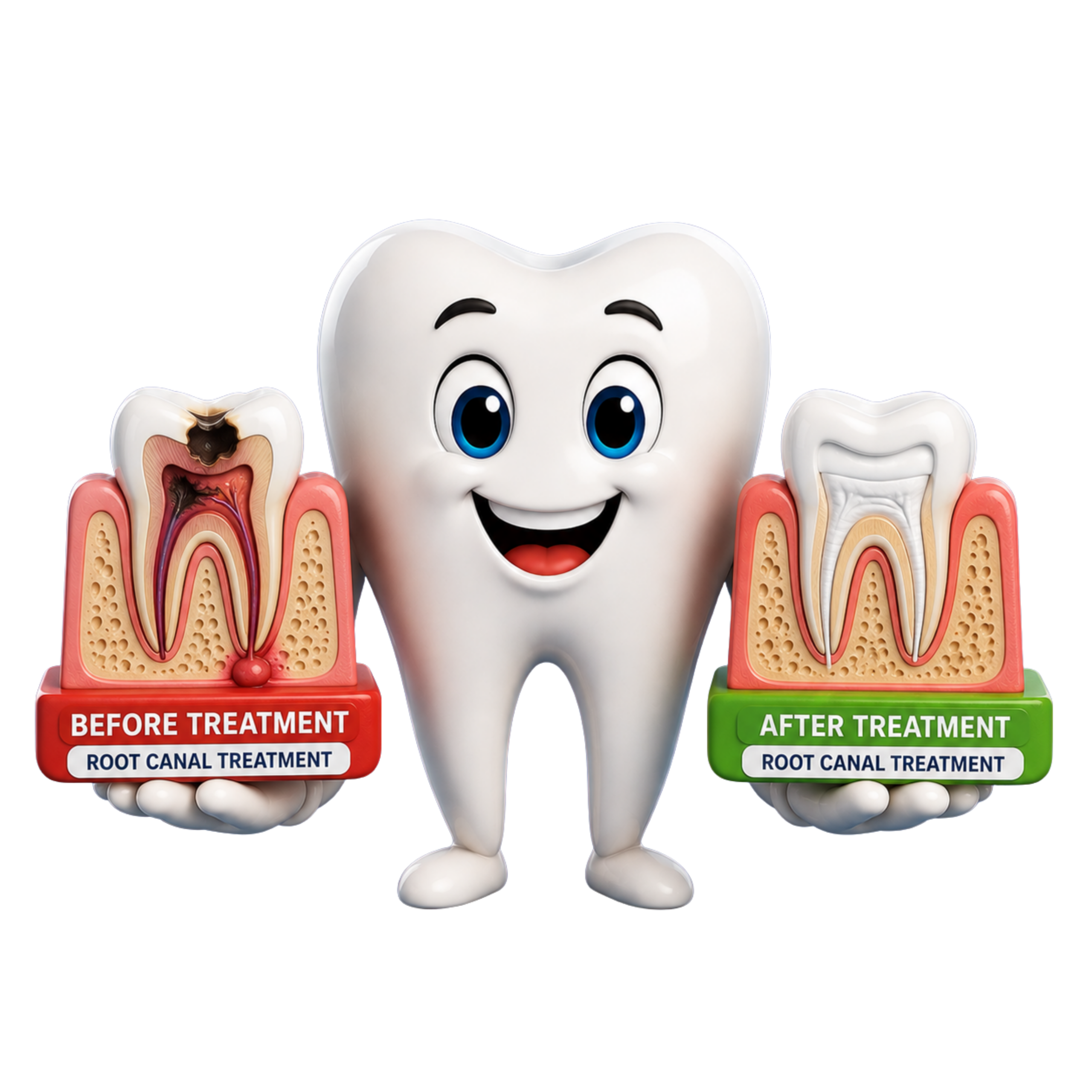
Think of it as a life-saving procedure for a deeply infected or damaged tooth. Rather than extracting the tooth, we gently remove the inflamed inner pulp, thoroughly clean and sanitize the root canals, and seal the chamber securely. Finished with a protective crown, your natural tooth is saved, completely pain-free, and fully functional for years to come.
The cleaning
Infected pulp and bacteria are carefully removed from inside the tooth using advanced micro-tools.
The restoration
The disinfected canals are biocompatibly sealed and capped with a crown to restore full strength.

The questions people don't say out loud before a root canal
Modern root canals are done under local anesthesia and feel similar to getting a filling. The pain people remember is usually from the infection beforehand, not the treatment itself.
The infection won't heal on its own and can spread to the bone or surrounding teeth, often leading to more pain and a more complicated treatment later.
In most cases no — a root canal is specifically designed to save the tooth. Extraction is usually only needed if the tooth is too damaged to restore.
It varies, but infection tends to worsen over time. If you're in pain now, it's best to be seen soon rather than wait for it to become an emergency.
Some tenderness for a few days is normal as the area heals. If pain persists beyond a week or worsens, let us know so we can check for an underlying issue.
In untreated cases, yes — dental infections can spread to nearby tissue and, in rare situations, become a broader health risk. That's why we treat them promptly.
It's uncommon once a tooth is properly treated and capped with a crown, though a small percentage of cases need retreatment years later.
Extraction can cost less upfront, but replacing the tooth with an implant or bridge later is usually more expensive than saving it now with a root canal.
Root Canal Treatment: Save the Tooth, End the Pain
A tooth that suddenly aches can turn your whole day upside down. Deep decay or infection is often the cause, and a root canal is the fix — a routine procedure that clears out the source of the pain and lets you keep your own tooth. With the infection gone, you avoid an extraction and protect your smile for years to come.
Book a Consultation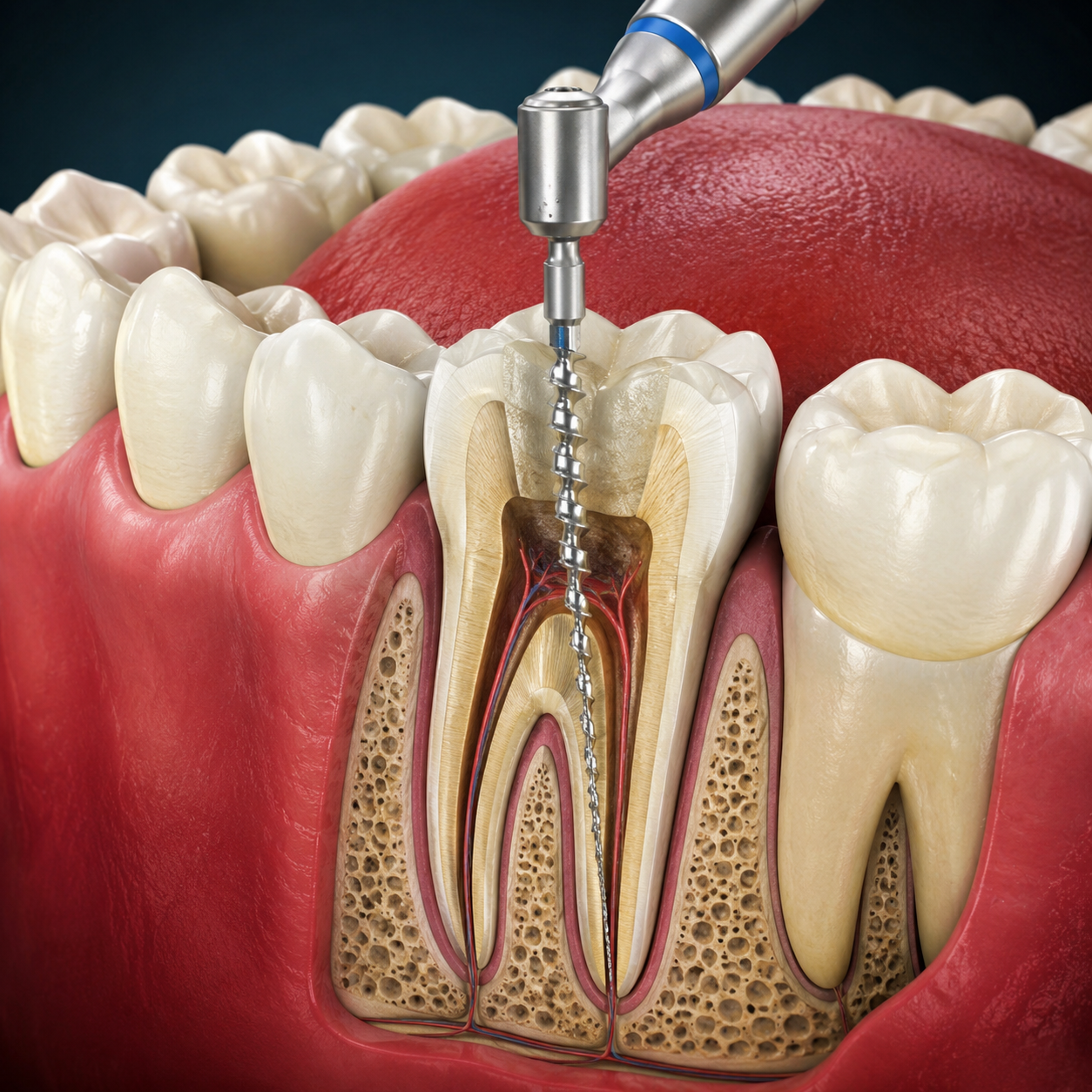
Why a Root Canal Might Be Necessary
Inside every tooth sits a soft core called the pulp, packed with tiny nerves and blood vessels. A deep cavity, a crack, or an injury can let bacteria reach that core and damage it. Left alone, the infection keeps spreading — bringing pain, swelling, and sometimes an abscess. A root canal clears out the damaged pulp, disinfects the space inside the tooth, and seals it up, so the tooth stays strong and functional instead of needing to be pulled.
What to Expect During the Procedure
Most patients are surprised by how manageable the visit feels — modern techniques keep it calm and virtually pain-free from start to finish.
Numbing the Area
A local anesthetic is applied first, so you stay comfortable and relaxed for everything that follows.
Reaching the Tooth
A small opening is made in the tooth's surface, giving direct access to the infected pulp inside.
Clearing the Canals
The damaged pulp is carefully removed, and the tiny canals are cleaned, shaped, and disinfected with precision tools.
Filling & Sealing
Once clean, the canals are packed with a biocompatible material and sealed to keep new infection out.
Rebuilding the Tooth
A crown or filling is placed on top, bringing back the tooth's natural strength and shape.
The Benefits of Root Canal Treatment
Relief From the Pain
Says goodbye to the constant ache and sensitivity that brought you in.
Stops the Spread
Keeps the infection from reaching neighboring teeth and gums.
Keeps Your Natural Tooth
Avoids extraction and the extra cost of a replacement tooth down the line.
Bite & Chew Normally
Lets you eat comfortably again, without favoring one side of your mouth.
Addressing Common Concerns
Will it hurt?
With today's numbing methods, most patients say it feels about the same as getting a regular filling.
How long does it take?
Usually just one or two short visits, depending on how involved the case is.
Is it worth it?
Yes — saving your own tooth is almost always the healthier and more affordable path.
Looking After Your Tooth Afterward
A little tenderness for a few days is normal and settles quickly on its own. Keep brushing and flossing as usual, steer clear of hard or chewy foods while the area heals, and come back for your follow-up visit so we can check that everything has settled the way it should.
With the infection cleared and the tooth properly sealed, most root canal treatments last for many years with nothing more than normal, everyday care.
Back to Services